Tensegrity in Pilates and TYE4X: A Comparison of Two Movement Models
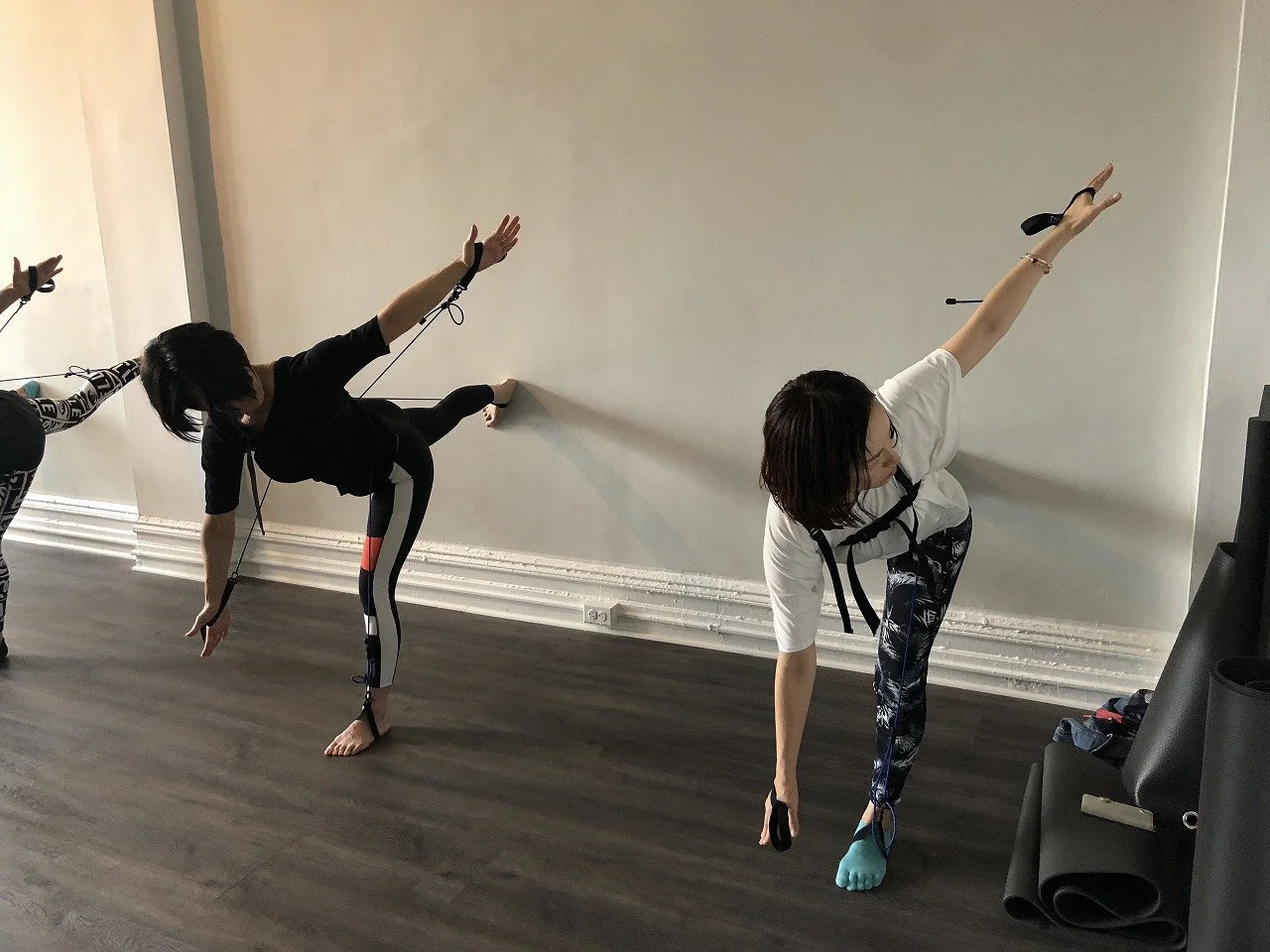
“Tye4® embodies ‘tensegrity’—a balance between tension and compression, between push and pull.”
This single sentence captures a core truth about how the body actually works versus how it is often trained. Most movement systems still rely on a compressive, contract-and-brace model of strength. Tensegrity offers a different framework—one that aligns more closely with Pilates at its best and becomes unmistakably clear when working with TYE4X.
Consider the squat. In a compressive or contracting model, the cues are familiar: keep the chest up, back straight, push the hips back, drive the knees out, brace the core, squeeze the glutes. Stability comes from compressing the spine and locking the torso into place. Power is generated by isolating and contracting large muscle groups. The result is strong and controlled, but often rigid. Joints—especially the knees and low back—absorb more direct load, and the movement can feel heavy over time.
A tensegrity-based squat operates on a different logic. Instead of stacking rigid parts, the body is organized as a continuous tensional network. Bones are suspended within fascia rather than piled on top of one another. Stability comes from balanced tension, not bracing. Power emerges from elastic recoil distributed across the whole system.
The cues shift accordingly. As the knees bend, the pelvis widens and yields, like a hammock opening. At the same time, the spine floats upward even as the body lowers. Knees follow the feet without being forced. At the bottom, there is a sense of expansion in all directions—down through the feet, up through the crown, wide through the hips and ribs. The rise out of the squat is not a push but a rebound, as if the floor is returning energy.
This is where TYE4X makes the comparison impossible to ignore. The elastic resistance rewards distributed tension and punishes bracing. If you compress and lock, the system feels dense and effortful. If you allow length, space, and balanced tension, the movement becomes springy, light, and integrated. The body learns efficiency through sensation rather than instruction.
The difference is felt immediately. A compress-and-contract squat pushes against the floor with a braced spine. A tensegrity squat yields into the floor and rebounds like a coiled structure releasing. One relies on force and endurance. The other relies on intelligence and energy return.
Pilates has always pointed toward this model, even when the language wasn’t explicit. TYE4X simply makes tensegrity tangible, revealing how much support is available when the body stops fighting itself and starts working as a unified system.