


Patent No. 10,542821B2Excellent proprioceptive tool for finding and strengthening the pelvic floor! And correcting postural issues.
— Despina Stamos, Pilates Teacher/Choreographer
About SmartSeat®
20 x 7 x 2 inches; 3.68 ounces washable foam seat. Posture Corrector to Relieve Lower Back and Sciatica Pain. Say goodbye to lower back and sciatica pain.
SmartSeat® posture corrector will make sitting with legs UN-crossed feel good. The special slope of the seat means that the sitter can comfortably sit for long periods in pelvic neutral, or even anteverted (tilt forward) or rock the pelvis for more flexibility. This seating posture helps relieve lower back and sciatica pain as it takes the act of sitting from a negative to neutral by enabling better weight distribution of the upper and lower body, giving a feeling of lightness. Sitting in a posterior tilt is a feeling of heaviness and compression. Using this posture corrector seat, you will feel lighter, pain-free, and more flexible!


Usage Instructions
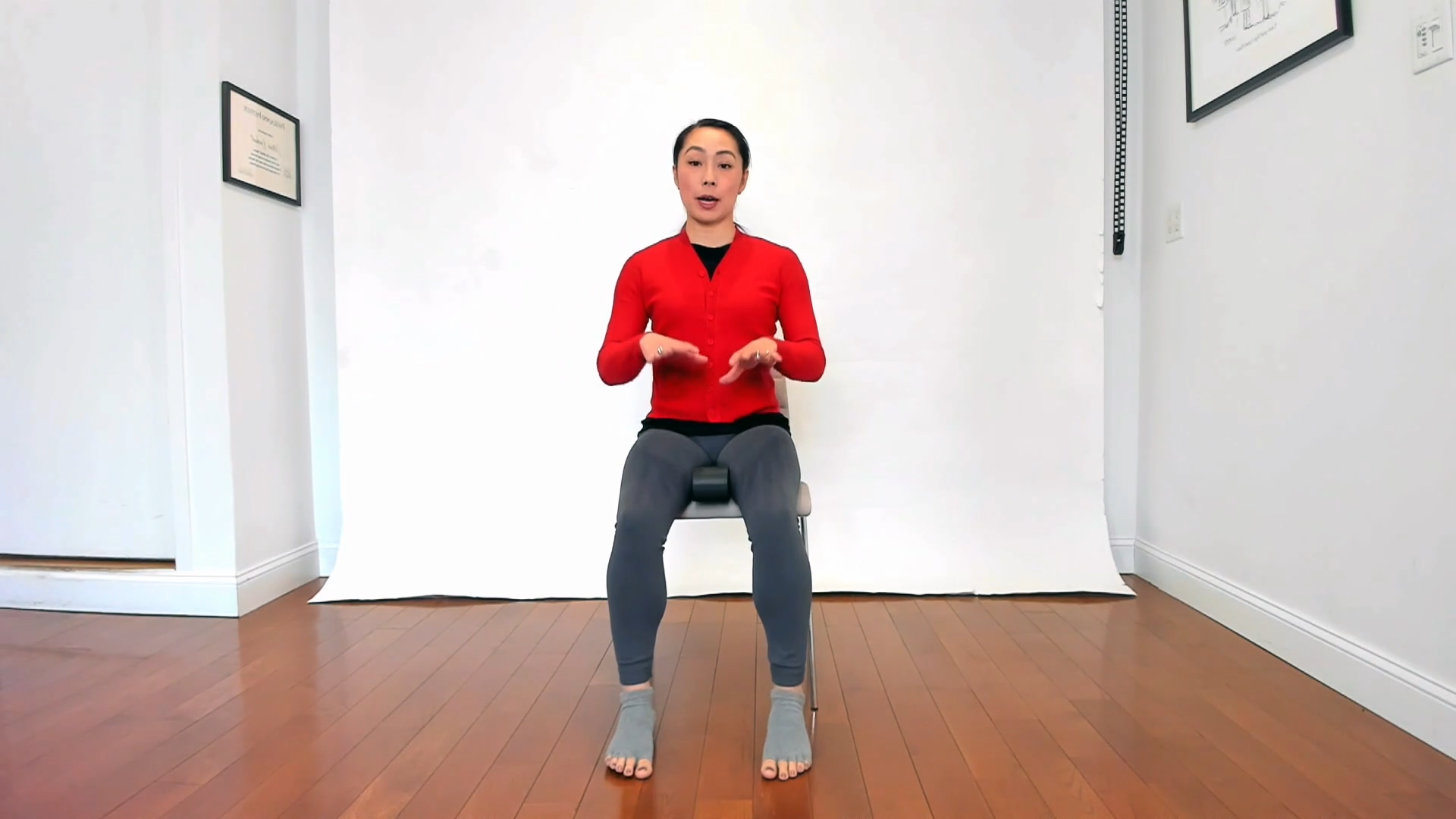
SmartSeat and Pregnancy

WHY SMARTSEAT® WORKS
Sitting with legs crossed feels comfortable because the body is smart and adapts to this posture. SmartSeat® provides a way to erase this muscle memory and acts as a posture corrector by substituting a better, bio-mechanically correct seated posture to relieve lower back pain, spider veins, and sciatic nerve pain. Additionally, you will avoid:
Abdominals inhibited—especially internal oblique muscles.
Pelvis in a posterior tilt so there is compression on the femoral nerve, artery and veins bilaterally which restricts circulation to the lower extremities.
Blood pressure increases due to compression.
Foot pain and numbness due to adverse neural tension which causes pressure on the peroneal nerve which may lead to long-term nerve damage.
Lumbar spine (low back) & nerves compressed in tilted posture.
Sciatic nerve and piriformis muscle stressed.
Femur (thighbone) abducted (rotated inward) which leads to lumpy looking thighs and spider veins.
Inspired by Clinical Advisor Marika Molnar PT, the first to recognize the issues of sitting with crossed legs.
